Before it was the finish line of a race, Appalachian Gap was already one of the hardest, most respected climbs in Vermont cycling. Here’s what makes it that way — and why we send riders up it every October.
The Climb
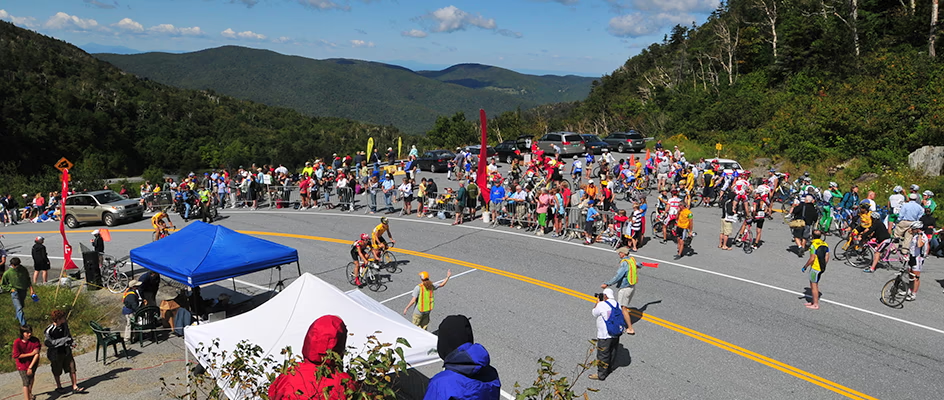
Appalachian Gap carries Vermont Route 17 over the Green Mountains, inside Camel’s Hump State Park. The east side — the side our race climbs, starting from the Route 100/17 intersection in Waitsfield — runs 6.2 miles and gains 1,600 vertical feet to a summit elevation of roughly 2,375 feet.
The grade doesn’t build gradually. It comes in pitches — a stretch that steepens, eases briefly, then steepens again — and the steepest sections, well into double digits, hit hardest in the final stretch before the summit. There’s no easing off near the top. That’s exactly where the road gets meanest.
More Than a Race
Long before the Allen Clark Hill Climb existed, Appalachian Gap had already earned its reputation. Vermont’s Long Trail crosses the road right at the summit, and hikers and leaf-peepers make the drive up just for the view — a sweeping look west across the Champlain Valley to Lake Champlain and the Adirondacks beyond.
Mad River Glen, one of New England’s last cooperatively-owned, most fiercely traditional ski areas, sits just south of the Gap on the same mountain. And App Gap shows up on serious cyclists’ radar well outside our race weekend too — it’s the summit finish of a stage in the Green Mountain Stage Race, one of the region’s longest-running competitive cycling events.
In other words: this isn’t a climb we invented significance for. It already had it. We just decided to race it.
Every October, we take this road on
Riders leave the start line individually, 30 seconds apart, and race the clock straight to the summit — no pack, no drafting, just you and 1,600 feet of vertical. All proceeds benefit Vermont Adaptive Ski & Sports, and the current course records — 23:11.43 for men, 26:47.30 for women — are there for anyone who thinks they can take them.
Curious about the person the race is named for? Read Allen Clark’s story →